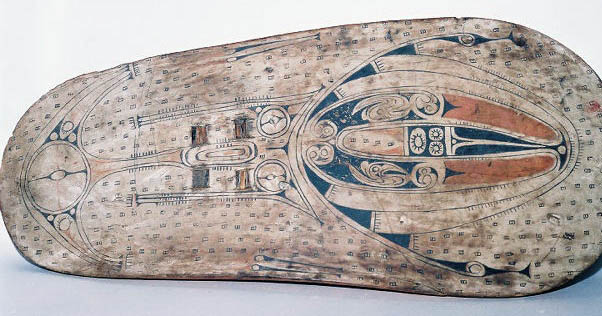
Trobriand Shield Virtual Museum
Collection of Trobriand war shields started during the period when early Christian missionaries and European expeditions infiltrated the Massim area in the Solomon Sea off British New Guinea.
Even the in-depth field work and ethnographic writing of Bronislaw Malinowski had failed to produce a definitive answer as to what, if anything, the designs on the decorated shields meant.

Welcome to a portal for all things Trobriand Academic texts * Narratives * Analyses * Photography |
||
|---|---|---|
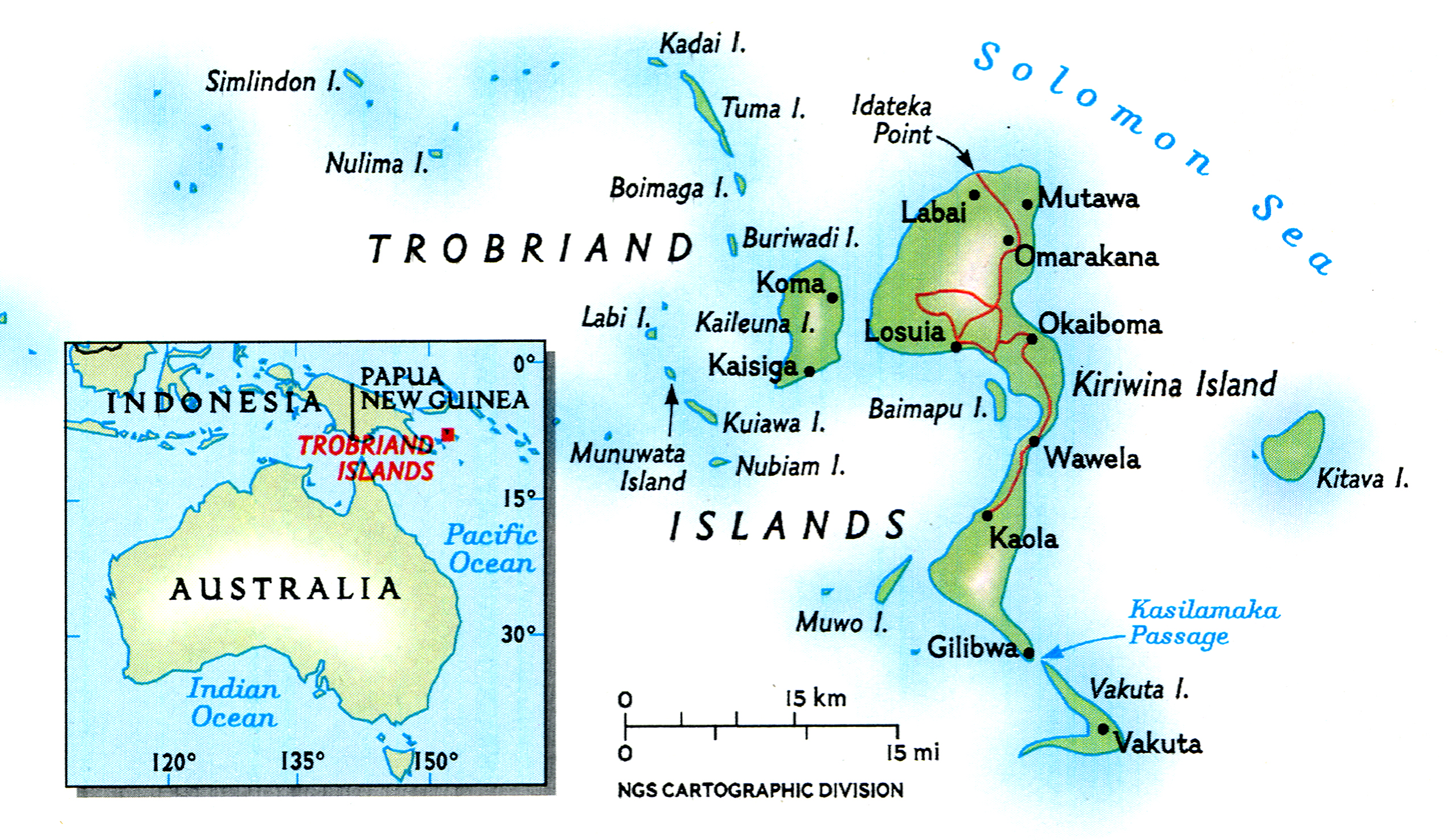
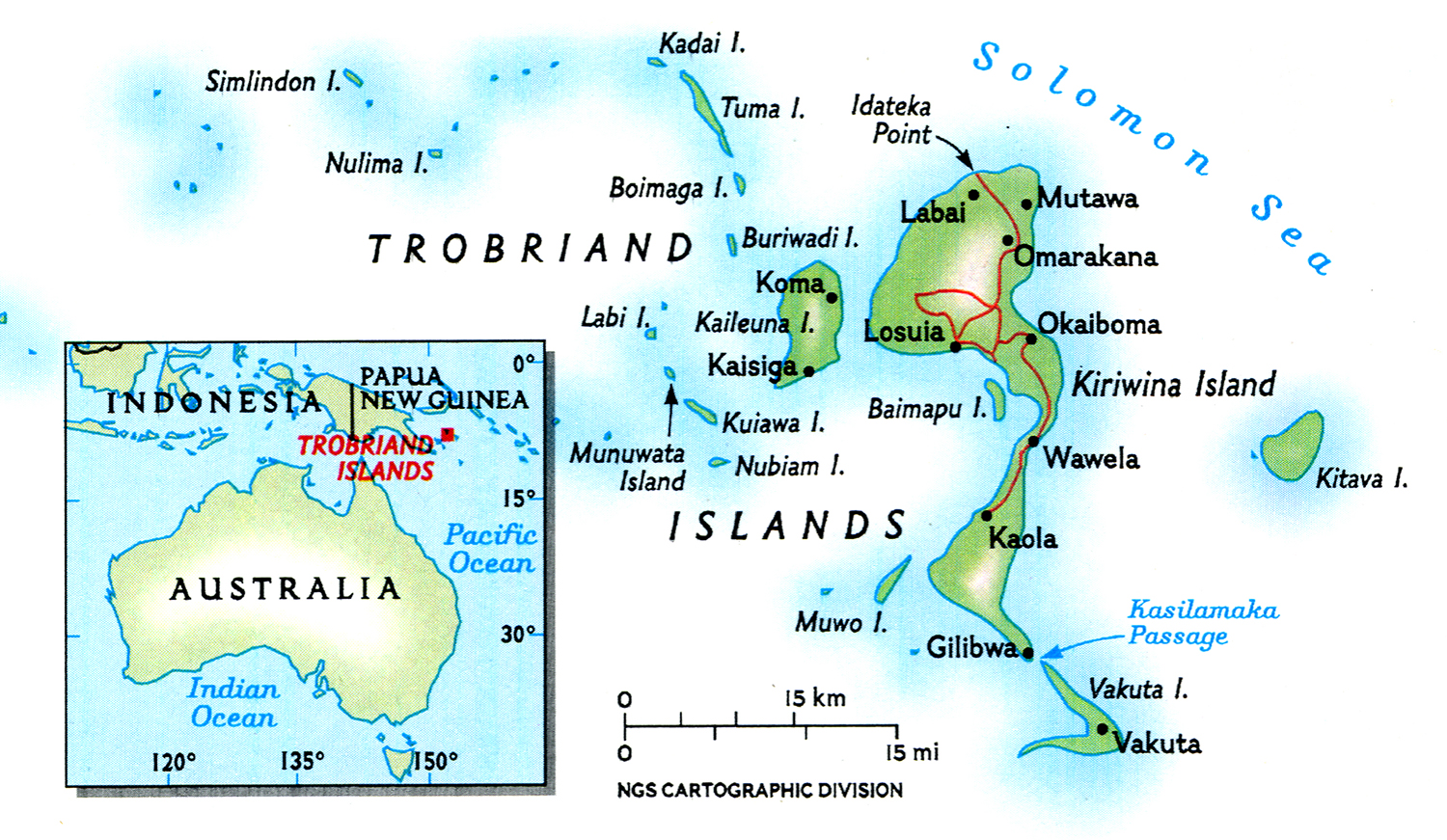
What is DEP? An extraordinary, in-depth, text-based tool for anthropologists The Digital Ethnographic Project (DEP), is an innovative and versatile tool for the storage, retrieval and analytical processing of ethnographic and historical texts. DEP is being created to contribute to the understanding and appreciation of culture by advancing in-depth, text-based ethnographic scholarship. Anthropology has been the central discipline to demonstrate the commonality of humankind and the enormous diversity of the human experience. Immersion, and the in-depth knowledge of a single society that it produces, has historically been one of our most effective vehicles for acquiring an understanding of, and appreciation for "others." DEP will facilitate immersion. DEP is a digital research environment designed to facilitate the process of ethnographic analysis. It will assist both scholars and students in dealing with some of the challenges and tedium imposed by intensive, non-linear re-analyses of texts. DEP will be composed of all known and accessible texts for a "classic case" culture -- the Trobriand Islanders of Milne Bay Province, Papua New Guinea. Trobriand ethnography and related Massim studies represent a research field of great historical breadth and analytical depth including the seminal works of Bronislaw Kasper Malinowski. It is, indeed, very rare for a student of anthropology, anywhere in the world, to complete his/her studies without considerable exposure to Trobriand ethnography. DEP will greatly simplify obtaining access to Trobriand texts, which are currently widely dispersed. The sheer volume of these texts, more than 15,000 pages, imposes temporal and conceptual limits for researchers, scholars preparing for the field, and in the teaching of ethnographic analysis from primary source materials. These materials are being scanned and then processed with Optical Character Recognition (OCR) software to produce machine readable texts. Once formatted for machine readability, the texts are stored in a database accessed via Zyindex. Indexed, digital texts can be searched in
|
"Imagine yourself suddenly set down ..." Malinowski, 1922 Malinowski's Trobriand Centenary in Malinowski has been largely credited as the originator, as well as primary advocate, of participant observation based fieldwork. His sojourns in the Trobriand Islands, and the texts which ensued, set the bar for generations of anthropologists by creating the dominant approach for apprehending the "other." One must live in the community of study, and seek fluency in its language while participating in the imponderbillia of everyday life. Thus DEP will facilitate: A secondary, but potentially more far-reaching objective of this project, is to provide a model that we hope will both stimulate and facilitate the creation of other digital archives. We envision a future research/teaching environment in which a digital throughway allows students and faculty access to complex textual discourses within which they examine and test contemporary knowledge. DEP is directed at this future. |
What else is here? While our focus centers on the Trobriands it also reaches out to the wider cultural area of the Massim. You'll find: *A wealth of academic texts *Transcriptions and translations of Trobriand narratives *Information about the authors of these texts *Analyses created with the use of our DEPTH database * Photographs with Trobriand content ------------------- DEP principals: Click to contact
|